
Moving to Florida is an exciting milestone, but there’s more to it than palm trees and sunshine. We understand that you want your insurance and legal details squared away so there are no surprises down the road. Does the thought of updating your policies feel overwhelming? You’re not alone. Many families want peace of mind, yet aren’t sure where to start.
Let’s make this smoother together. In this guide, we’ll walk you step by step through important policy updates after moving to Florida, addressing the crucial, the confusing, and even the commonly missed details. Whether you’re a brand-new Floridian or you’ve just realized it’s time for a refresh, you’ll find practical tips and friendly advice on every page. Ready to turn paperwork into progress? Here’s what every newcomer should know.
Just Moved to Florida? Let’s Get Your Insurance Squared Away
New to the Sunshine State? You’ve got enough on your plate—your insurance shouldn’t be a guessing game. At Chapman Insurance Group, we help new Florida residents update their policies with confidence. From auto and home to flood and health, we’ll walk you through every step.
Why choose us? With access to over 35 carriers and deep knowledge of Florida’s legal and insurance requirements, we make your transition smooth and your coverage reliable. Learn why thousands trust CIG when moving to Florida.
Need help making the switch? Contact us today and let’s simplify your move with coverage that fits your new life.
Key Takeaways
- Update your insurance policies promptly after moving to Florida to comply with state laws and avoid coverage gaps.
- Florida requires specific car insurance coverage, so verify your auto policy meets local minimums and update your vehicle registration and driver’s license within 30 days.
- Homeowners in Florida should consider separate flood insurance as it’s not included in standard policies due to regional weather risks.
- Notify your health and life insurance providers of your new Florida address and review options to ensure continued access to care and important policy communications.
- Review homeowners or renters insurance for hurricane and flood coverage, and consult with a local agent to understand special deductibles or policy requirements.
- Take advantage of Florida’s legal and tax benefits by officially establishing residency and checking eligibility for homestead exemptions and insurance discounts.
Understanding Florida’s Insurance and Legal Requirements
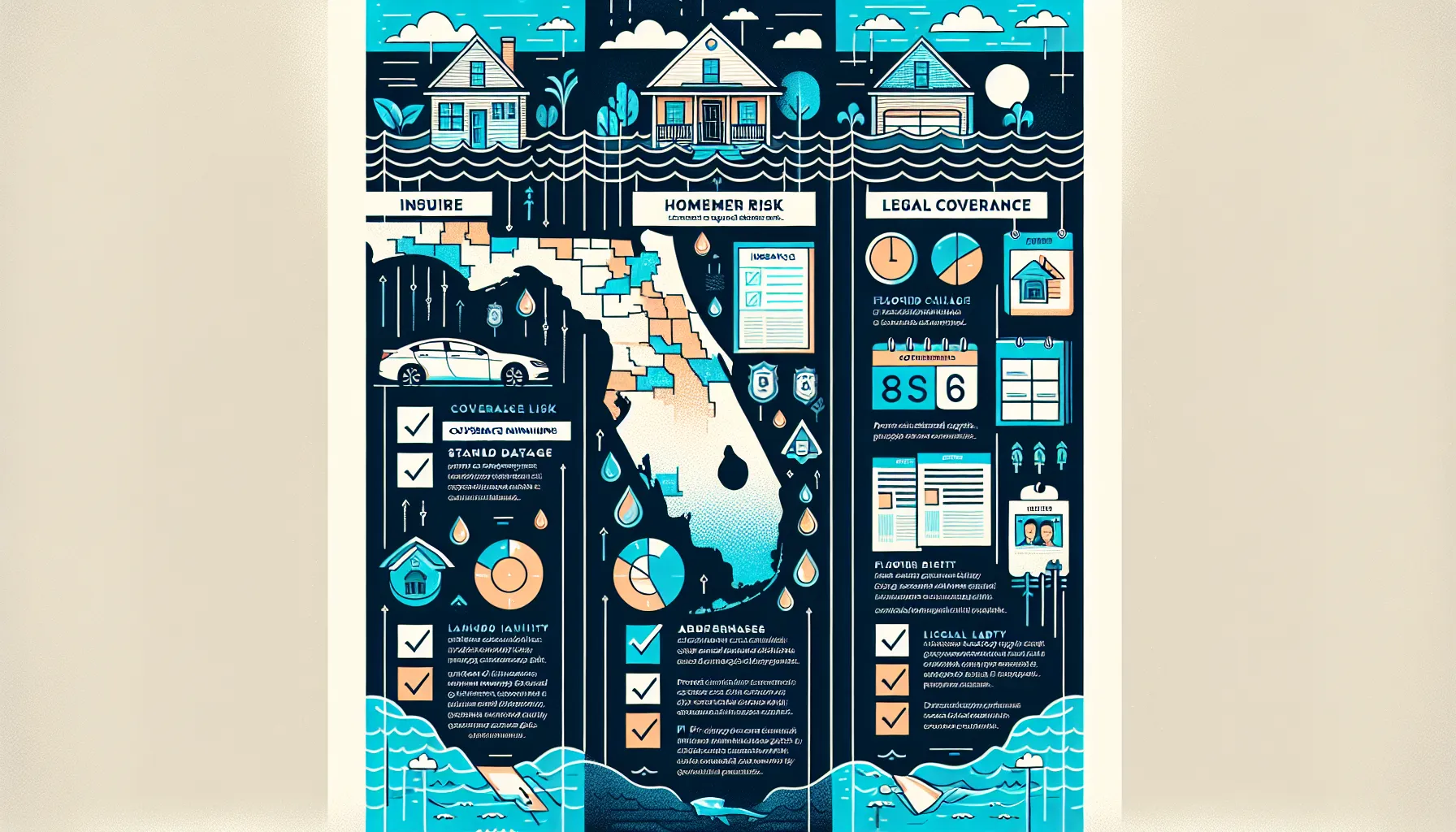
Florida isn’t just famous for its beaches and theme parks, it has specific insurance rules worth understanding. Home, auto, and flood coverage here tend to look a little different from what you might have known elsewhere.
Homeowners and Flood Insurance
Many new residents are surprised to learn that flood insurance is not included in a standard homeowners policy. In Florida, because of our geography and frequent storms, you’ll want to assess if your home is in a flood zone and seriously consider a separate flood policy. Recent years have shown how essential this can be, particularly in coastal or low-lying neighborhoods.
Car Insurance Minimums
Florida law requires drivers to carry a minimum amount of car insurance, including Personal Injury Protection (PIP) and Property Damage Liability. But, these minimums may be different from your previous state. We recommend reviewing coverage levels to be sure you have enough protection, not just the minimum required.
Legal Compliance
From having proof of insurance in your car to keeping your address current, Florida expects you to adjust quickly. Missing a deadline can result in fines or headaches you’d rather avoid. Let’s explore the practical steps in detail.
Notifying Your Insurance Providers
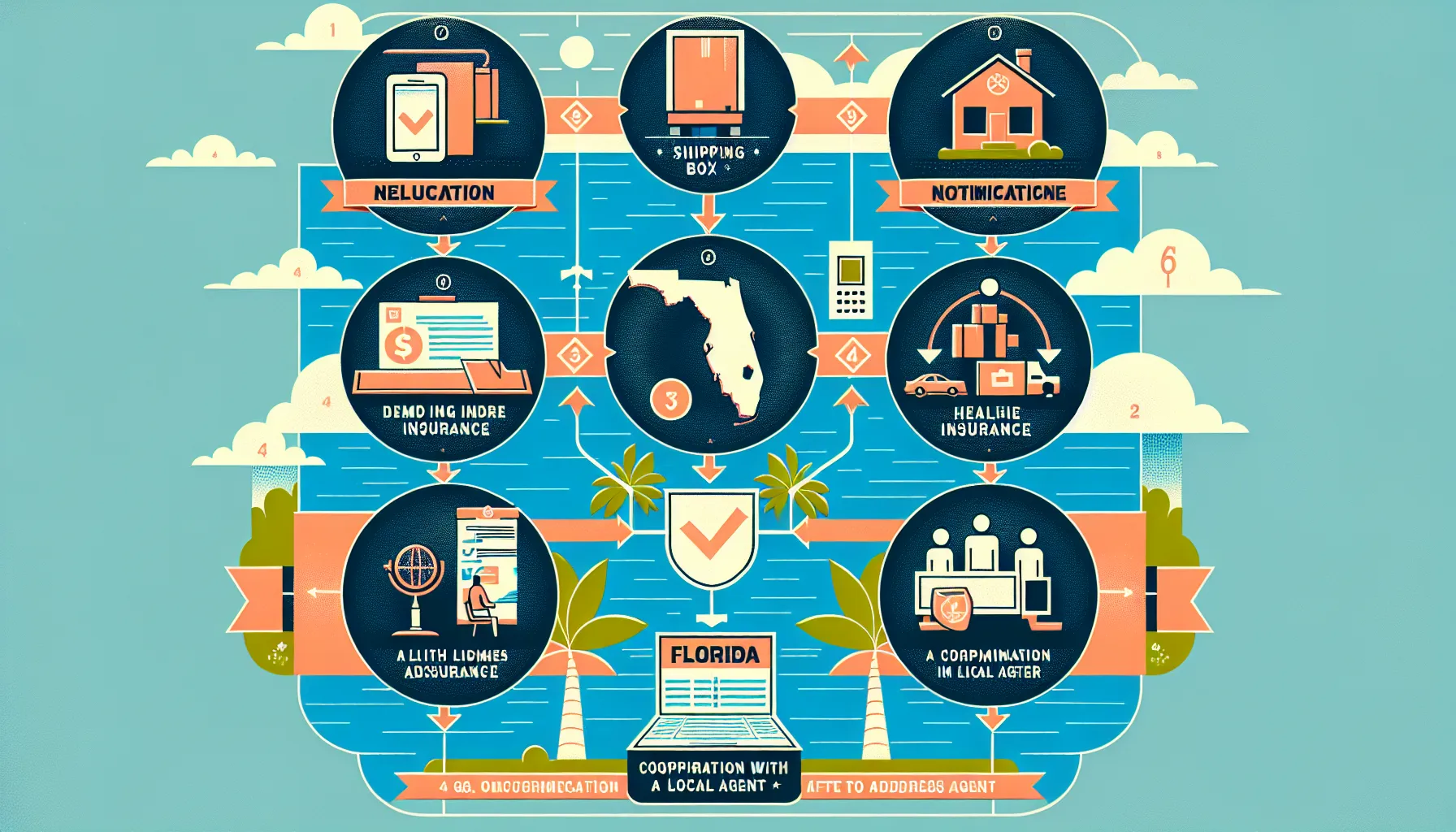
Once you’ve moved, one of your first calls should be to your insurance companies. Most providers require prompt notice of an address change, especially if you cross state lines.
List all the policies you carry, home, flood, auto, health, even life insurance. Reach out to each provider and let them know your new address. This simple step can help prevent gaps or claim denials later. It’s also a chance to ask if Florida-specific coverages or endorsements are needed.
Some insurance policies can be transferred or modified, but others might need to be rewritten completely due to Florida’s distinct regulations. Be candid and ask questions. Would reviewing your options with a local agent bring peace of mind? We’ve found that local expertise is invaluable for understanding regional risks and opportunities.
Updating Vehicle Registration and Driver’s License
The Sunshine State wants new residents to update their driver’s license and vehicle registration within 30 days of establishing residency. This isn’t just a bureaucratic detail, it’s key to keeping your car insurance valid and legal.
The Process
- Visit a local Florida Department of Highway Safety and Motor Vehicles office.
- Bring required documents such as proof of identity, your old license, Social Security Number, and two proofs of Florida residency.
- Update your address with your auto insurer as soon as you receive your new Florida license and registration.
We know lines can be long and forms can seem endless, but completing this step promptly protects you from potential lapses in coverage or future penalties. Have you checked if your auto coverage needs to be rewritten for Florida? A quick call to your insurer could make all the difference.
Adjusting Health and Life Insurance Policies
Moving states can affect your health and life insurance more than most people realize. Florida’s network of doctors, hospitals, and specialists varies from other regions, so your existing plans may or may not travel with you.
Health Insurance
Notify your health insurance provider about the move. Some employer plans or private providers will help you transition, but you’ll want to double-check if your favorite doctors are considered in-network here. Are you covered if you end up in a new county or need a referral? Don’t hesitate to reach out for new plan options if you’re unsure.
Life Insurance
If you carry life insurance, update your mailing address so annual updates or important policy communications don’t get lost. Some policies have state-specific riders, and your provider may recommend tweaks to best protect your family’s future now that you’re a Florida resident. It’s smart to review beneficiaries and confirm coverage details post-move.
Impacts on Homeowners and Renters Insurance
Florida’s weather brings its own set of challenges, and your coverage should reflect that. Hurricanes, high winds, and flooding can test even the best preparation. Have you talked with an agent about special deductibles for hurricane damage or possible exclusions for wind or water?
Homeowners Insurance Considerations
Many policies here have unique features like hurricane deductibles or limits on certain types of claims. Some carriers may even require extra documentation or inspections before binding a new policy. If you’re moving into a condo, make sure you understand the division between personal and association responsibility, the lines can be tricky.
Renters Insurance in Florida
Renters insurance is highly recommended. Landlords’ policies usually cover only the building, not your personal belongings. In flood-prone zones, renters should also investigate supplemental flood protection for personal items. A few minutes reviewing your policy with a knowledgeable agent now can provide real confidence later.
Legal and Tax Implications of Your Move
Switching states means more than a change of address. It often affects your legal and tax status, too. Florida is known for its lack of state income tax, good news for most folks, but you’ll still want to pay attention to various local and federal requirements.
Establishing Residency
Officially establishing residency helps clarify where you pay taxes, which benefits you can access, and how local property tax rates apply. Update voter registration and review any changes to estate planning.
Insurance and Legal Benefits
In Florida, homestead exemptions may lower property taxes for eligible homeowners. Check if you qualify. Some auto insurance discounts also depend on your residency status, so double-check what’s on file with both your insurer and the DMV. Are there other tax credits or paperwork you’ve overlooked? Consulting a local advisor can shed light on details that might otherwise be missed.
Conclusion
Transitioning your insurance and legal details after a move to Florida may seem like a tall order, but taking it one step at a time puts you in charge. We’ve helped many Floridians find clarity and confidence amid new rules and requirements. Will your next policy review reveal hidden opportunities for better protection or savings?
We invite you to ask questions and reach out for expert guidance. With preparation, patience, and the right support, you can settle in with peace of mind, ready to enjoy everything Florida has to offer.
Frequently Asked Questions About Policy Updates After Moving to Florida
What insurance policies should I update after moving to Florida?
After moving to Florida, you should update your homeowners, auto, flood, health, and life insurance policies. Each may require adjustments due to Florida’s unique regulations and risks, such as hurricane coverage and flood zones.
How soon do I need to update my driver’s license and vehicle registration in Florida?
Florida requires new residents to update their driver’s license and vehicle registration within 30 days of establishing residency. Prompt updates ensure that your car insurance remains valid and help you comply with state law.
Is flood insurance required for Florida homeowners?
Flood insurance isn’t required by law but is strongly recommended in Florida, especially in flood-prone areas. Standard homeowners policies don’t cover flood damage, so it’s wise to assess your property’s risk and consider a separate flood policy.
Do I need to notify my health insurance company about moving to Florida?
Yes, it’s important to inform your health insurance provider about your move. Network coverage and plan availability can change by state, so confirming in-network doctors and available plans in Florida is essential.
What are the tax implications of establishing residency in Florida?
Florida does not have a state income tax, which can benefit new residents. Establishing residency affects where you pay taxes and may provide homeowners with property tax exemptions. Always consult a local tax or legal advisor to understand your specific situation.
How does moving to Florida affect my renters insurance?
If you’re renting in Florida, update your renters insurance to reflect your new address. Consider supplemental flood protection, as typical renters insurance doesn’t cover flood damage, and verify your policy covers local weather risks unique to Florida.